Liverpool Heart and Chest Hospital first in the country to use pioneering technology for earlier lung cancer diagnosis
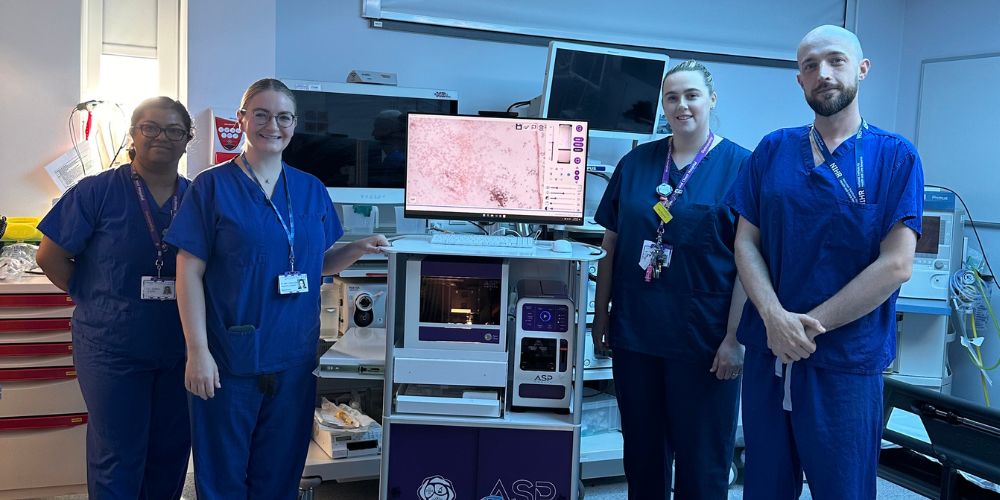
Patients at the highest risk of lung cancer are set to benefit from a pioneering new technique that could help to diagnose the disease faster and reduce the need for repeat procedures.
Liverpool Heart and Chest Hospital (LHCH) is the first hospital in the country to introduce remote rapid on-site evaluation (ROSE) technology for real-time assessment of lung tissue samples during diagnostic procedures.
The technique allows clinicians to analyse samples while the patient is still undergoing an endobronchial ultrasound (EBUS), enabling them to confirm immediately whether enough tissue has been collected for diagnosis.
EBUS is a minimally invasive procedure used to examine the lungs, airways and lymph nodes in the chest, and is commonly used to investigate suspected lung cancer.
The introduction of the new technology at LHCH has been made possible through funding from Liverpool Heart and Chest Hospital Charity and the Tevir Group on behalf of the Keith Jones Foundation.
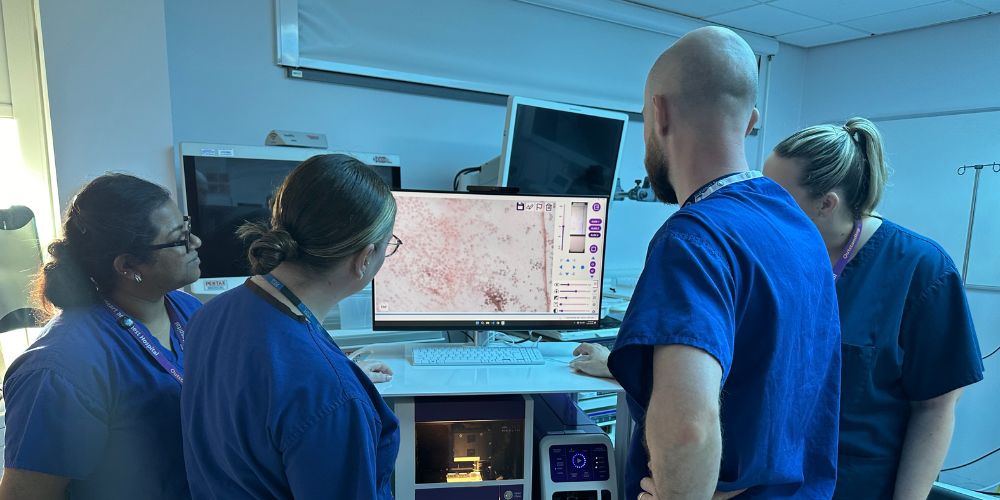
The new ASP Health ROSE platform, combined with Smart in Media Pathozoom technology, allows specialists to view samples microscopically in real time remotely, removing the need for personnel in the room. The slides are prepared and stained by the technology, then beamed remotely allowing a pathologist offsite to manoeuvre the microscope, view the slides, and provide live feedback on the diagnosis.
By confirming sample quality during the procedure itself, clinicians can avoid the delays and inconvenience associated with repeat appointments. The technology is expected to speed up diagnosis, reduce patient anxiety and help ensure treatment can begin sooner where required.
The first procedure using the technology was successfully performed, in September 2026, by Dr Emily Hoodless, Consultant Respiratory Physician, Dr Thomas Fitzmaurice, NIHR Academic Clinical Lecturer in Respiratory Medicine and the specialist respiratory team at LHCH with support from pathology colleagues at Liverpool Clinical Laboratories.
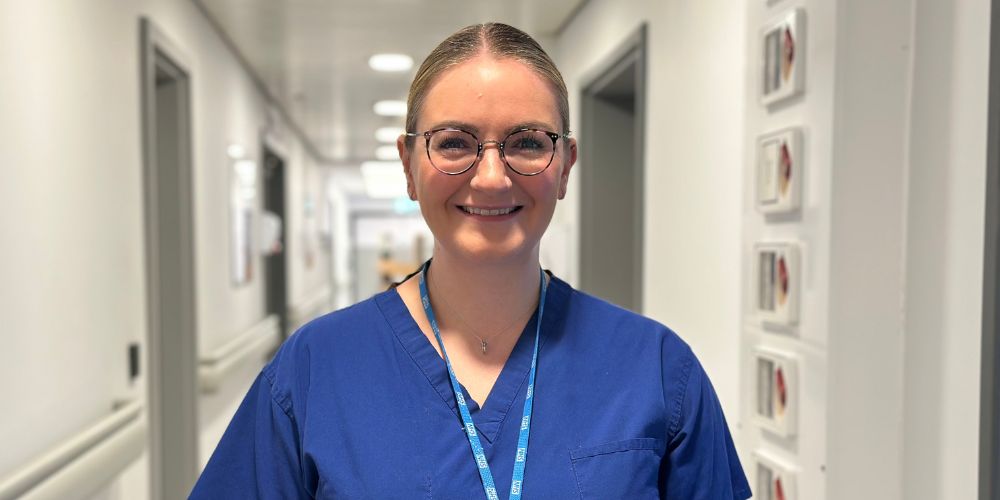
Dr Hoodless (pictured above) said: “We are proud to be the first hospital in the country to offer remote, rapid on-site evaluation for intra-procedural diagnosis of lung pathology for interventional bronchoscopy procedures.
“The new procedure will initially be offered to patients at the highest risk of lung cancer, where it has the potential to make the greatest difference.
“The benefits for both patients and staff are significant. We can now assess samples during the procedure and confirm immediately whether they are sufficient for diagnosis. This means fewer people will need to undergo the discomfort and anxiety of a second procedure, while we can now provide patients with a diagnosis, quicker than ever before.
“Avoiding any delays in diagnosis is vital. The earlier we can confirm a diagnosis, the sooner any necessary treatment can be initiated, and the sooner we can provide reassurance where cancer is not found.
“Furthermore, we plan to use this new technology to support future research, helping us to improve care and treatment for patients in the years ahead.”
Mary Liley, Head of Fundraising for LHCH Charity, said: “We are delighted that the Charity has been able to support the hospital with the introduction of this innovative new medical technology.
“A huge thank you to Tevir Group, who on behalf of the Keith Jones Foundation, made the generous donation which made this investment possible.
“We are sure this equipment will help deliver a lasting impact on the lives of our patients and their families, through quicker diagnoses and better overall experience.”
Notes to Editors
- Liverpool Heart and Chest Hospital is a twice ‘Outstanding’ rated specialist heart and chest hospital, consistently recognised for the quality of care by patients and staff.
- LHCH Charity supports LHCH to deliver advanced heart and lung care, cutting-edge equipment and vital support for patients and their families. Every pound raised funds life-saving equipment, pioneering research and improvements that transform the hospital experience at some of life’s most critical moments.