Meet the Specialist with Dr Clare Quarterman
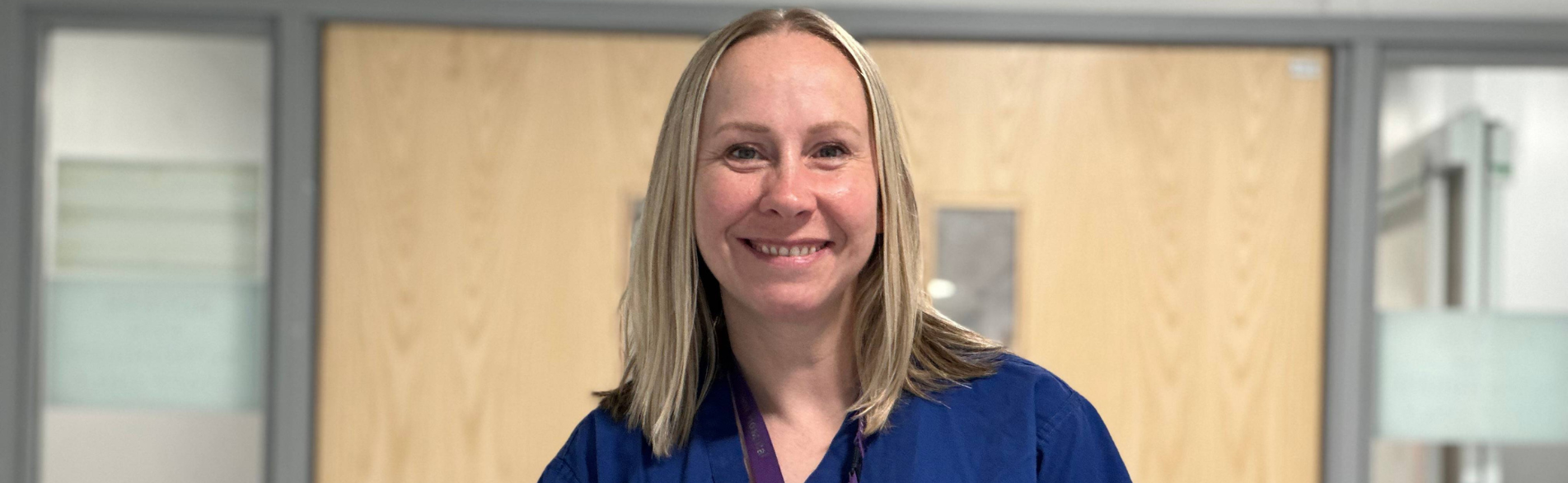
For the next instalment of the ‘Meet the Specialist’ series we are pleased to introduce you to Dr Clare Quarterman who is a Consultant Anaesthetist, Intensivist and Director of Medical Education at Liverpool Heart and Chest Hospital.
We caught up with Dr Quarterman to find out more about what inspired her to take the first step into a career which specialises in anaesthesia, intensive care and medical education.
Inspired to make a difference
Originally from Birmingham in the West Midlands, Dr Quarterman explains that medicine had been something she wanted to pursue since her childhood years. She shared:
“In school I always enjoyed science and problem solving so I knew I wanted to go into a related profession.
“My mum was a huge inspiration to me as a research doctor with a PhD. She worked on groundbreaking research to develop cancer drugs and so from a young age I started to think about the positive impact this had on people.
“I have fond childhood memories of spending time in a research laboratory watching my mum work.”
A doctor in the making
Asked how her career started Dr Quarterman discussed:
“In 1999, I went to the University of Manchester to study my chosen degree in medicine.
“During my final year of medical school, I did a one-month placement in intensive care at Wythenshawe Hospital in Manchester which began my interest in anaesthesia. After completion of my degree, I went on to do two years foundation training at Stepping Hill Hospital in Stockport. I did a foundation post in the anaesthetic department and intensive care here. It was at this point it was cemented for me that these were my key areas of interest.”
“In 2007, I began speciality training in anaesthesia and in 2015, I became a Consultant Anaesthetist and Intensivist here at LHCH.”
A career spanning three specialties
Dr Quarterman's career combines three complementary areas of expertise – cardiac anaesthesia, intensive care medicine and medical education – giving her the opportunity to care for patients at every stage of their journey while also helping to shape the next generation of doctors.
Her primary clinical specialty is cardiac anaesthesia. As a consultant cardiothoracic anaesthetist, she provides anaesthesia and perioperative care for patients undergoing complex heart and major blood vessel surgery. Working as part of a multidisciplinary team, her role extends far beyond administering anaesthetic drugs. She is responsible for carefully planning each patient's anaesthetic, maintaining their vital functions throughout surgery and responding rapidly to any changes during the procedure to ensure the safest possible outcome.
Reflecting on what first attracted her to the specialty, Dr Quarterman said:
"During my training, I spent three months at Liverpool Heart and Chest Hospital and was immediately drawn to cardiac anaesthesia as a career.
"I loved the challenge of developing an individualised anaesthetic plan for each patient based on their condition and the type of surgery they were having. Throughout the operation, you are continuously monitoring and supporting the patient's cardiovascular, respiratory and neurological systems while working closely with the surgeon and perfusionist. It requires constant communication, teamwork and attention to detail, and I found that incredibly rewarding."
Alongside her work in theatre, Dr Quarterman is also a consultant in intensive care medicine. She cares for some of the hospital's sickest patients in Liverpool Heart and Chest Hospital's Critical Care Unit, one of the largest single-site specialist critical care units in the region. Working across both the Post Operative Critical Care Unit (POCCU) and Intensive Care Unit (ITU), she supports patients through the crucial hours and days following major cardiothoracic surgery.
She said:
"The intensive care aspect of my role gives me the opportunity to care for some of the most complex and critically ill patients in the hospital. Managing patients recovering from cardiac and thoracic surgery can be incredibly challenging, but seeing them recover from major surgery and critical illness is hugely rewarding.
"I also really value the opportunity to spend more time with patients and their families during the post-operative period. Supporting them through what can be a very difficult time is an important part of my role and something I find immensely fulfilling."
Alongside her clinical practice, Dr Quarterman's third specialty is medical education. Through her roles as Director of Medical Education, educational supervisor and Royal College of Anaesthetists College Tutor, she is helping to develop the future medical workforce, ensuring doctors in training receive the guidance, support and opportunities they need to thrive.
A positive influence on the next generation of doctors
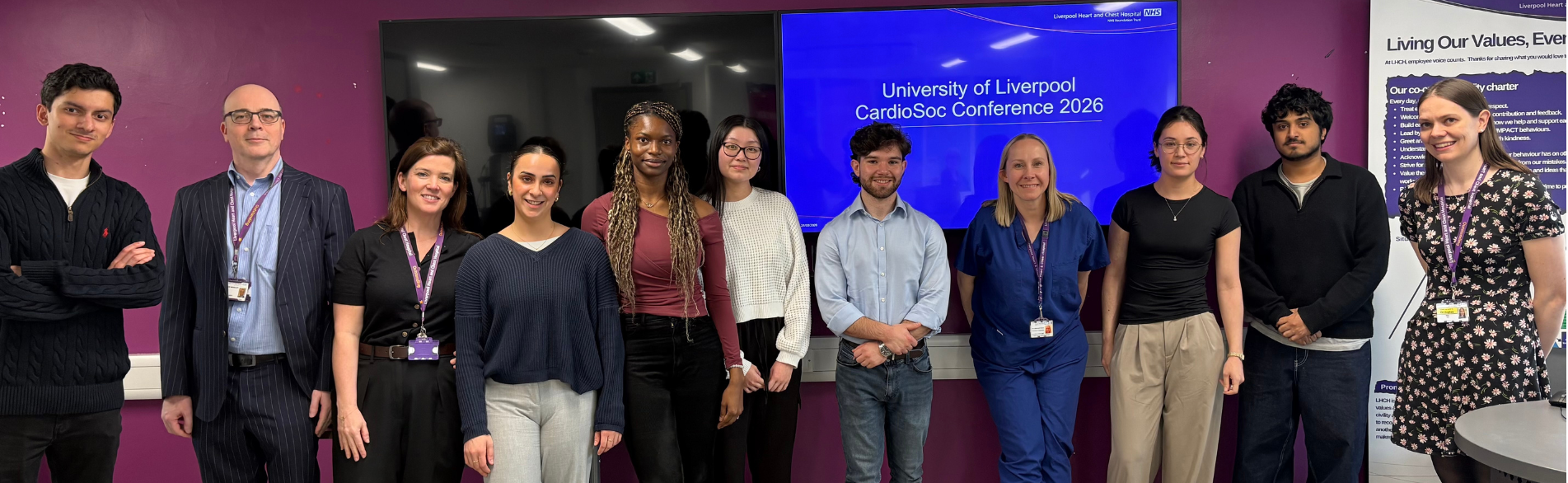
Dr Quarterman (fourth from right) pictured with consultant colleagues and students at a medical student conference earlier this year.
Passionate about supporting doctors throughout their training, Dr Quarterman spoke about her role as Director of Medical Education, which she undertakes alongside her clinical commitments as a consultant cardiothoracic anaesthetist.
"I've always valued the people throughout my career who took the time to support me, showed a genuine interest in my development and wanted me to succeed. That had a lasting impact on me and inspired the kind of colleague I wanted to become – someone who is approachable, supportive and always happy to help.
"I completed a Postgraduate Certificate in Medical Education (PGCE) before becoming an educational supervisor because I wanted to support resident doctors as they progress through their training at Liverpool Heart and Chest Hospital and develop their careers in medicine.
"I initially supported anaesthetic trainees before becoming the Royal College of Anaesthetists College Tutor in 2021, a role I continue to hold today.
"The following year, I was appointed Director of Medical Education. In this role, I have the privilege of supporting resident doctors across a wide range of specialties, including anaesthesia, cardiothoracic surgery, cardiology, respiratory medicine and radiology.
"The role has given me a much broader understanding of medical training pathways across the Trust and the opportunity to work with colleagues from many different specialties. I now work with resident doctors across almost every area of the hospital. My aim is to support them in the best way I can so they can develop into confident, skilled clinicians and provide the highest standard of care for our patients and their families.
"It's important that we value all of our doctors because every one of them plays a vital role in delivering excellent care and ensuring patients have the best possible experience."
When asked what advice she would give to doctors in training, she said:
"Most of the time, people genuinely want to help you. Be honest about what you know and what you don't know, and never be afraid to ask your colleagues for advice. Seeking support is an important part of learning and developing as a doctor."
Advancing medical education through simulation
Simulation has become an increasingly important part of medical education, providing healthcare professionals with a safe and realistic environment to develop both technical and non-technical skills before applying them in clinical practice.
Discussing its growing role at Liverpool Heart and Chest Hospital, Dr Quarterman said:
"Simulation has always been part of training at LHCH, but we're keen to expand its use and make the most of its potential.
"For example, LHCH Charity has supported our radiology department with enhanced simulation equipment, and we hope to build on this success by expanding simulation-based teaching across other specialties in the near future."
Simulation enables clinicians to rehearse routine procedures alongside rare, high-pressure emergencies, strengthening clinical decision-making, communication, teamwork and leadership. By recreating realistic scenarios, it bridges the gap between theory and practice, ultimately improving patient safety and helping clinicians deliver the highest standards of care.
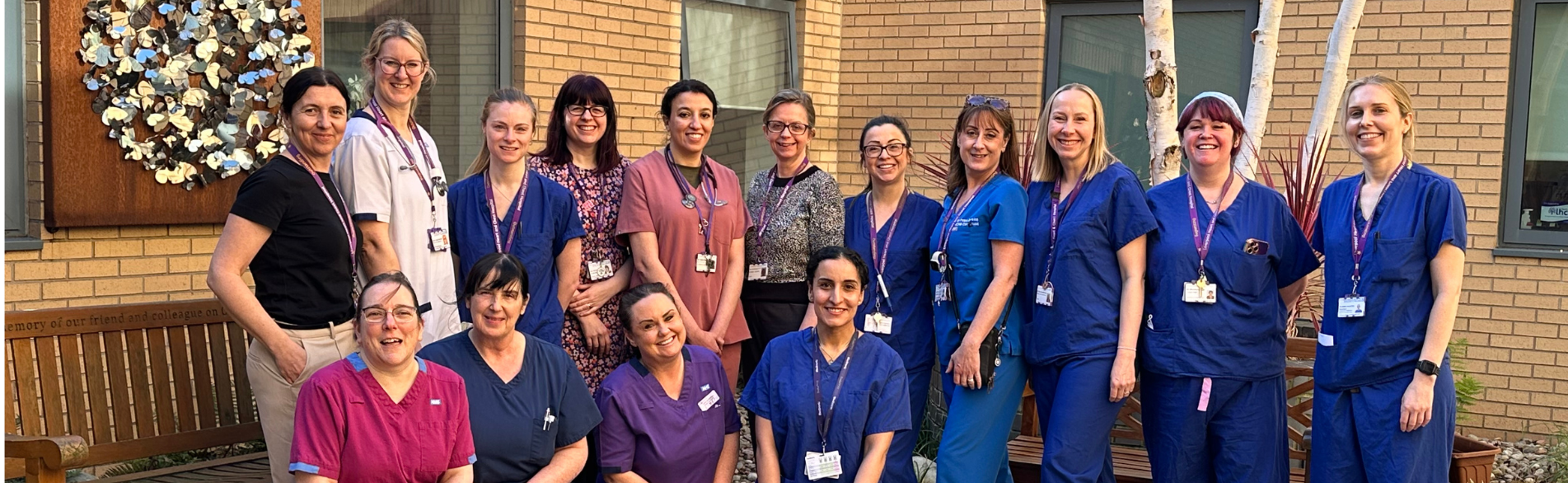
Dr Quarterman (third from right) pictured with multidisciplinary colleagues at Liverpool Heart and Chest Hospital earlier this year.
Delivering increasingly complex care
Reflecting on how cardiothoracic care has evolved since becoming a consultant, Dr Quarterman said the complexity of patients and procedures has increased significantly.
"The average patient is much more complex now and the surgery we undertake is increasingly challenging.
"We're successfully performing these highly complex operations and procedures, which is testament to how well our multidisciplinary teams work together to achieve excellent outcomes for patients."
She believes one of the most rewarding aspects of cardiothoracic anaesthesia is the continual opportunity to learn and develop. Advances in perioperative medicine, haemodynamic monitoring, transoesophageal echocardiography, mechanical circulatory support and critical care continue to transform practice, allowing clinicians to adopt new evidence-based techniques that further improve patient outcomes.
The moments that matter most
While Dr Quarterman has held a number of leadership roles throughout her career, it is seeing patients recover that continues to give her the greatest sense of achievement.
"What makes me happiest is seeing patients after surgery when everything has gone well and they're recovering. Those moments mean so much.
"In my role, I don't always get to see patients after they leave intensive care, so I really value reading their feedback once they've been discharged and returned home.
"Seeing people recover from these life-changing operations is incredible, and it's something that never loses its importance."
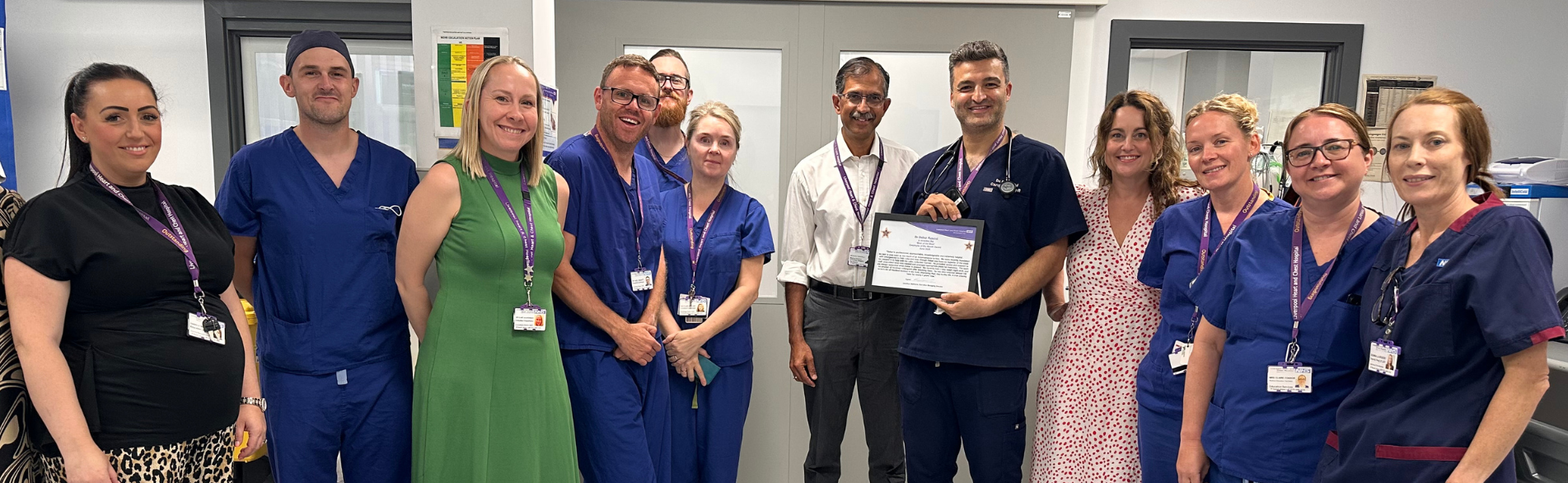
Dr Quarterman is pictured with Dr Debar Rasoul, Specialist Registrar for Cardiology who was recently presented with employee of the month award, members of the Hospital Leadership team, consultant colleagues and cath lab and education staff.
Life outside the hospital
Away from work, Dr Quarterman is a busy mum to two daughters and enjoys spending time with her family alongside her husband.
She is also a lifelong Aston Villa supporter.
"I first went to watch Aston Villa when I was very young and I've been a devoted fan ever since. It's certainly been a great time to support them, especially after winning the Europa League."
When she's looking to unwind, she enjoys learning new skills and recently fulfilled a long-held ambition by taking up the piano.
"I've been learning to play the piano for the last couple of years and it's become a brilliant way to relax."